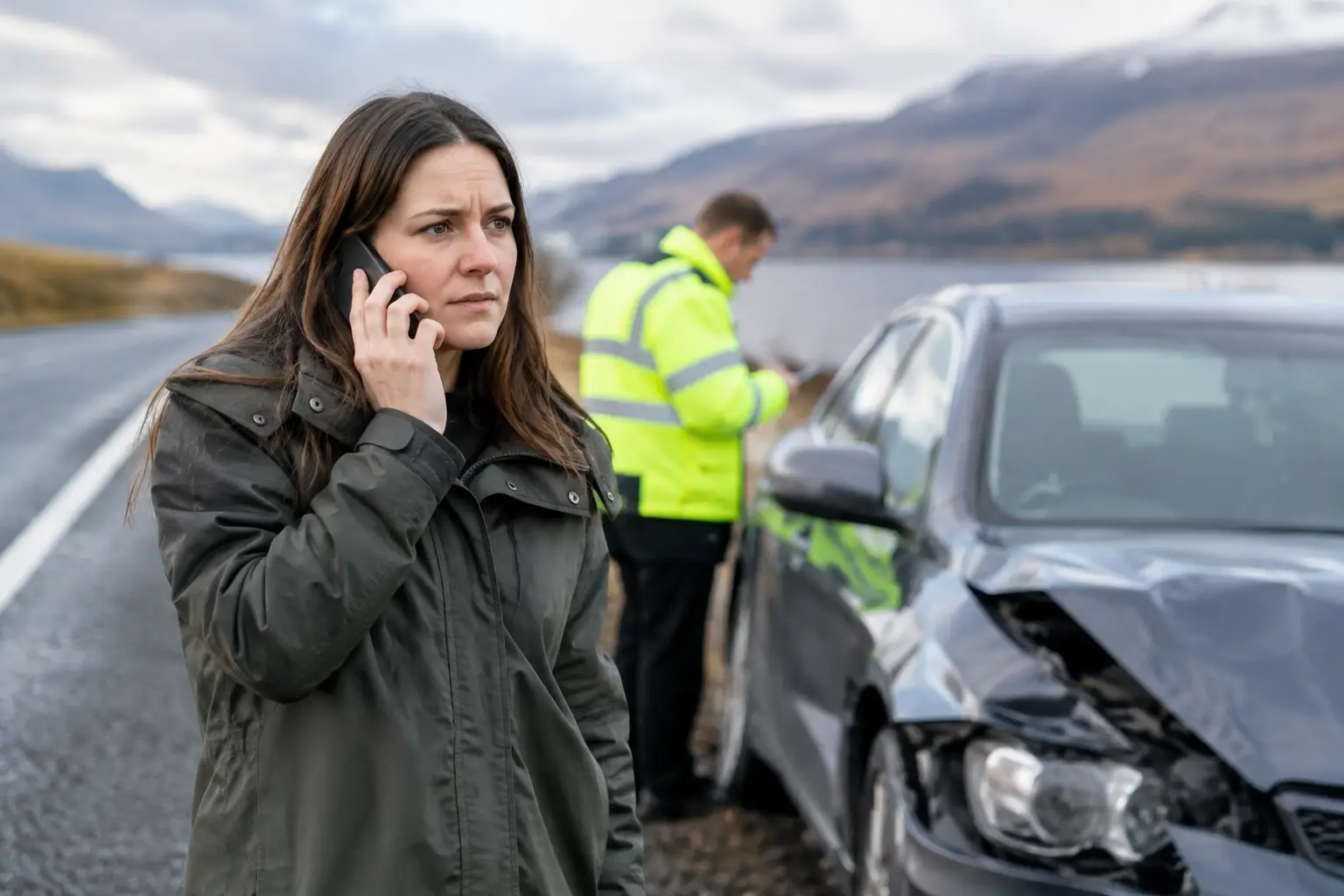
A road accident can turn an ordinary journey into a painful, expensive disruption within seconds. Whether you were driving, travelling as a passenger, riding a motorbike, cycling or walking, the immediate concern is your health. But once you are safe, the steps you take can also protect your right to claim compensation for an injury that was not your fault.
You should not have to carry the financial consequences of somebody else’s careless driving. Time off work, treatment costs, damaged belongings and the strain of recovery can all add up quickly. A clear record from the start puts you in a stronger position.
Road accidents: the first steps that matter
Put safety first. If anyone has been injured, or there is danger from traffic, fire or a blocked road, call 999. Do not move somebody who may have a serious injury unless there is an immediate risk. If the collision does not require an emergency response but needs to be reported, contact Police Scotland on 101.
When it is safe to do so, exchange details with the other driver. This should include their name, address, vehicle registration number and insurer details. Do not argue about blame at the roadside or accept responsibility simply to make an uncomfortable situation end. The facts can be assessed later using the evidence.
If you can, take photographs of the vehicles, road position, damage, skid marks, signs, traffic lights and weather conditions. Photograph visible injuries as well. Ask independent witnesses for their names and contact details. A short note made while events are fresh can be valuable weeks or months later.
There are five practical actions worth taking after a collision:
- Get medical attention, even if your symptoms initially seem minor.
- Report the accident to your insurer promptly and stick to the facts.
- Keep every document connected to the injury and your losses.
- Record how the injury affects work, sleep, travel and daily tasks.
- Seek legal advice before accepting an insurer’s first compensation offer.
Some injuries take time to become clear. Whiplash, soft-tissue damage, back pain, concussion symptoms and anxiety can develop or worsen after the shock has passed. Seeing a GP, attending A&E or visiting an appropriate medical professional creates an important record of what happened and how you were affected.
Can you claim after a road accident?
You may be able to make a personal injury claim where another road user was at fault, wholly or partly. That could include a driver who was speeding, failed to look properly, pulled out at a junction, used a phone behind the wheel, drove too close, ignored a red light or failed to give a cyclist or pedestrian enough space.
Claims are not limited to drivers. Passengers often have a strong basis for a claim where the person driving their vehicle, or another driver, caused the collision. Motorcyclists, cyclists and pedestrians may also be entitled to compensation when another person’s negligence caused their injuries.
Fault is not always straightforward. A collision involving several vehicles, poor visibility or conflicting accounts may need closer investigation. That does not mean you should assume you cannot claim. Evidence such as CCTV, dashcam footage, witness accounts, vehicle damage and police information can help establish what happened.
In some cases, responsibility can be shared. This is known as contributory negligence. For example, an insurer may argue that a seatbelt was not worn or that a pedestrian stepped into the road without looking. Where that argument succeeds, compensation may be reduced rather than lost completely. Every case depends on its own facts, which is why an early assessment is useful.
Evidence that can support your compensation claim
The most persuasive claims are built on evidence, not guesswork. Save photographs and video footage in more than one place. If you have dashcam footage, keep the original file rather than relying only on a clip shared by message. Nearby shops, homes or public buildings may also have CCTV, but footage can be deleted quickly, so it is worth raising this early.
Keep a folder for medical letters, prescriptions, receipts, physiotherapy appointments, taxi fares and correspondence with insurers. If you have missed work, hold on to payslips showing lost earnings and obtain confirmation from your employer if possible. Self-employed people should retain cancelled jobs, invoices and accounts that show the financial impact.
A simple recovery diary can also help. Write down pain levels, appointments you miss, support you need at home and activities you can no longer manage. This is not about exaggerating your injury. It is about giving an accurate picture of the day-to-day effect that a medical report or a brief insurer form may not capture.
What compensation may cover
Compensation is intended to put you, as far as money can, back in the position you would have been in had the accident not happened. The amount depends on the injury itself, your recovery prognosis and the financial losses caused by the collision.
A claim can include compensation for pain, suffering and the loss of enjoyment of life. It may also include lost earnings, treatment expenses, care and assistance, travel costs and damaged personal items such as clothing, glasses, helmets or mobile phones. If your injury affects your ability to work in the future, that may also need to be considered.
There is no honest fixed figure for a road accident claim without seeing the evidence and medical position. Be cautious of anyone who promises a settlement amount before understanding your injury. Equally, do not let an insurer rush you into accepting a quick offer while you are still receiving treatment or do not yet know whether you will make a full recovery.
Time limits in Scotland
For many personal injury claims in Scotland, the usual time limit is three years from the date of the accident. There are exceptions, including for children and in certain circumstances where the full impact of an injury was not known straight away. However, waiting is rarely in your interests.
The longer you leave matters, the greater the risk that CCTV disappears, witnesses become difficult to trace and paperwork is misplaced. Acting promptly gives a solicitor more opportunity to protect evidence and assess the claim properly. A free, no-obligation assessment can clarify where you stand without committing you to proceed.
No Win No Fee should still be clear about fees
The cost of legal help worries many injured people, particularly when they are already facing lost income and household bills. A No Win No Fee arrangement means you do not pay upfront for your claim to be assessed and pursued under the agreed terms. But you should always ask exactly what success fee will be deducted if the claim succeeds.
That percentage matters. Scotland Claims operates with an 18% success fee including VAT, rather than the up to 20% charged by some firms. On a £10,000 compensation award, an 18% deduction is £1,800, leaving £8,200. A 20% deduction is £2,000, leaving £8,000. That £200 difference is your money.
Before instructing any solicitor, ask for the fee arrangement in writing and make sure you understand it. Clear answers are not a bonus. They are what you should expect when someone is handling a claim that affects your recovery and finances.
Do not let the claims process add to the pressure
You do not need to have every document ready before asking for help. A solicitor can begin by listening to what happened, checking whether the other party may be responsible and explaining the next steps in plain English. They can then gather evidence, arrange an appropriate medical assessment, value your losses and deal with insurers on your behalf.
The right time to seek advice is while the facts are still clear and before a low offer or confusing insurer correspondence pushes you into a decision. Focus on your treatment and recovery, keep what evidence you have, and get a straightforward view of what you may be entitled to keep.