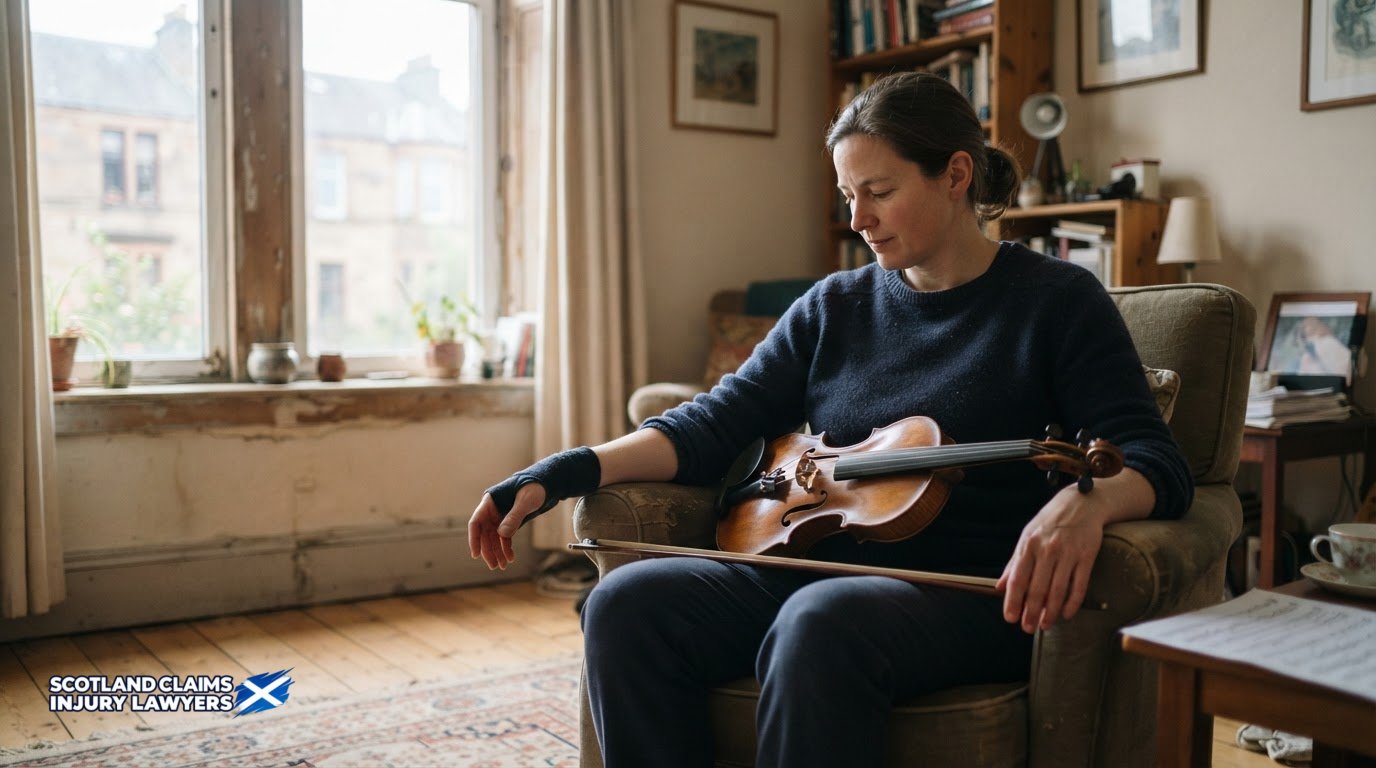
An injury can take away more than comfort. It can change what you’re able to do and enjoy. Loss of amenity compensation in Scotland may reflect that impact as part of general damages. There’s no set formula: the assessment considers how the injury has affected your quality of life.
If you’ve had to give up a hobby, rely on help with everyday tasks or change your routine while recovering, those effects may matter. To qualify, your injury and its impact must have been caused by someone who owed you a duty of care, breached that duty through negligence and caused your loss.
This guide explains what loss of amenity means, how temporary and lasting changes to your life may be assessed, and how it differs from financial losses such as lost earnings. You’ll also learn what evidence can help show the effects of an injury and how eligibility is considered in a Scottish personal injury claim.
Key Takeaways
- Loss of amenity concerns how an injury changes your quality of life, including activities and everyday abilities.
- Show what has changed by considering your pre-injury routines and evidence of the activities you can no longer enjoy.
- Separate the personal impact of an injury from financial losses such as lost earnings; they are assessed in different ways.
- Both temporary recovery restrictions and lasting effects may be relevant when the impact of an injury is assessed.
- Eligibility depends on proving that another party’s negligence caused your injury and its effect on your life.
Meaning of loss of amenity in personal injury claims
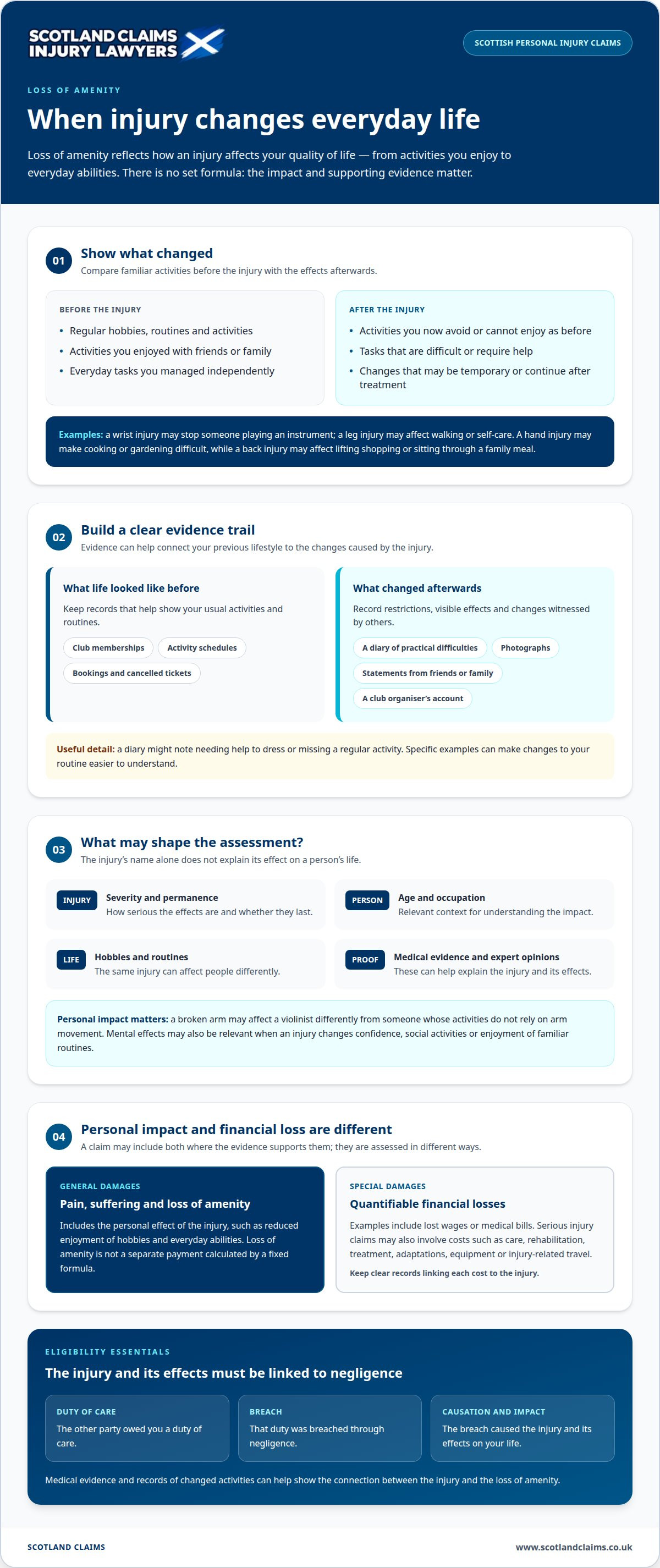
Loss of amenity describes how an injury reduces your quality of life. In a personal injury claim, it can cover activities and everyday abilities you’ve lost or can no longer enjoy as before. For example, a wrist injury might prevent you from playing an instrument, while a leg injury could affect walking or caring for yourself. The effects may be temporary during recovery or continue after treatment.
Loss of amenity forms part of general damages for pain, suffering and loss of amenity, rather than a separate payment calculated by a fixed formula. The assessment considers the injury’s effects, including changes to your hobbies and routine. Special damages are different: they cover quantifiable financial losses, such as lost wages or medical bills. A claim can include both types of damages where the evidence supports them.
Courts in Scotland, England and Wales all consider an injury’s effects when assessing damages for pain, suffering and loss of amenity. There is no set formula for comparing awards across these jurisdictions. The injury, its effects and comparable cases inform the assessment, so a figure from England or Wales cannot automatically predict a Scottish award.
Property damage and nuisance claims raise different issues from personal injury claims. An injury-based loss of amenity award addresses the impact on a person’s life, not simply reduced enjoyment of a property. If a nuisance or damaged property also causes a physical or psychiatric injury, those are distinct effects to identify and evidence, rather than assume one assessment covers both.
An accident claim may involve an injury caused by a road collision, workplace incident, or slip or trip. Medical negligence is a separate type of claim involving alleged negligent medical treatment, not the same as an accident claim. The key distinction here is what caused the injury and whether it changed your quality of life.
Time limits matter. According to UK legislation register, in most cases a person in Scotland has three years from the date of injury to start a serious injury claim under the Prescription and Limitation (Scotland) Act 1973. The usual time limit for most personal injury claims is also three years from the date the injury occurred. Exceptions can apply, so the relevant circumstances and start date need careful assessment.
A Conditional Fee Agreement, commonly called a No Win No Fee agreement, means you don’t pay the solicitor’s fees upfront, while the claim is ongoing, or if it fails. If the claim succeeds, the agreement may provide for a success fee from compensation, described as a small, legally capped percentage. Read the agreement terms so you understand how fees are handled before proceeding.
To pursue a claim for loss, establish that another party owed you a duty of care, breached it through negligence, and caused your injury and its effects. Then gather relevant medical evidence and records showing changes to your activities, such as cancelled tickets or statements from friends and family. A Scottish personal injury claim can be assessed with support from injury lawyers in Scotland.
A personal injury can disrupt a familiar activity, not just cause pain. A cyclist with a leg injury may be unable to ride with friends; someone with a hand injury may struggle to cook, garden or play an instrument. A back injury might make lifting shopping or sitting through a family meal difficult. These examples show how the same injury can affect people differently, depending on their routines and interests.
Evidence is stronger when it shows what you did before the accident and what changed afterwards. Records of regular activities, club memberships, event bookings and cancelled tickets can help establish your previous lifestyle. After the injury, a diary can record practical restrictions, such as needing help to dress or missing weekly football. Photographs may illustrate visible injuries or changes to activities. Statements from friends or family can describe changes they witnessed.
Valuation considers more than the name of an injury. Relevant factors include its severity and permanence, your age, occupation, hobbies, medical evidence and expert opinions. A broken arm may have a different effect on a violinist than on someone whose activities do not rely on arm movement. A solicitor can connect medical findings with specific changes to your daily life. Mental effects can also matter where an injury affects confidence, social activities or enjoyment of familiar routines.
- Compare the activities you regularly enjoyed before the accident with those you now avoid or need help to do.
- Keep relevant records, including bookings, activity schedules and notes about changed routines.
- Identify who can describe the impact, such as a family member, friend or club organiser.
Serious injury claims may also include special damages for financial consequences. In Scotland, these can cover past and future earnings loss, care and assistance, rehabilitation and therapy, home or vehicle adaptations, prosthetics, specialist equipment, medical treatment and injury-related travel. These expenses are assessed separately from the personal effect on hobbies and everyday abilities. Clear records help show how each cost relates to the injury.
Eligibility depends on proving that another party owed you a duty of care, breached it through negligence, and caused your injury and resulting loss of amenity. For example, a workplace injury claim requires evidence connecting the incident, the responsible party’s breach and your physical or mental effects. A personal injury compensation calculator can offer an initial estimate; the evidence and impact on your life remain central to assessing a successful claim.
General and special damages
A personal injury claim can include damages for both the injury’s personal effects and its financial consequences. Separating these heads of loss helps show how recovery has affected your quality of life and finances.
Loss of Amenity as General Damages
Loss of amenity is a non-financial effect of injury, assessed as part of general damages for pain, suffering and loss of amenity. It matters because the effect on your life is distinct from expenses or lost income. For example, a shoulder injury might limit playing with your children even if your earnings are unaffected.
Courts generally make a single award for pain, suffering and loss of amenity, using the Judicial College Guidelines and comparable cases as references. There’s no set formula that converts a missed hobby or reduced independence into a precise figure. Injury severity, lasting effects and personal circumstances shape the assessment, so temporary discomfort differs from lasting restrictions.
Loss of Amenity Alongside Other Damages
Loss of amenity can be considered alongside other damages because it addresses a different consequence from financial loss. A person unable to return to work may experience reduced income and also lose valued activities outside work. The income loss is assessed financially; the effect on everyday enjoyment forms part of general damages. Keeping those impacts distinct helps explain the full consequences of an injury.
Special damages cover financial losses that can be calculated from records. These may include earnings already lost, future loss of earnings, treatment costs, care and assistance, rehabilitation, travel, or necessary changes to a home or vehicle. Payslips and employer records may help establish missed income, while receipts can document injury-related expenses. Future losses require evidence connecting the expected cost to the injury.
One accident can cause several injuries and types of loss. A court may break down an award to show the value attributed to each injury, while assessing financial losses separately. That does not mean every effect receives a standalone payment. The evidence must explain how the injury caused each claimed consequence and avoid counting the same loss twice.
For a child, an injury may affect school, play or participation in family activities; an adult’s impact may involve work, caring responsibilities or independent living. Those differences can help explain why the same injury does not produce identical assessments. Medical evidence describes the injury, while earnings and expense records show financial effects. Together, they create a clearer account of recovery and the damages claimed.
What Does Loss Of Amenity Mean?
An injury can change your quality of life by restricting ordinary routines, hobbies or social activities. The difference between what you could do before and what you can do now helps explain its personal impact.
Temporary and Permanent Effects
Temporary loss of amenity describes restrictions that ease during recovery, while permanent loss involves lasting effects. A knee injury might prevent someone from dancing or walking their dog for a time, then improve with rehabilitation. By contrast, lasting stiffness could continue to limit those activities. The duration and extent of the change help show how the injury affected everyday life.
Reduced Enjoyment of Life
Reduced enjoyment means an injury makes a valued activity harder, less comfortable or no longer possible. A keen cook with reduced finger movement might stop preparing elaborate meals; a musician with hearing damage might struggle to enjoy rehearsals. The impact is personal. Evidence about previous participation and current restrictions helps explain what changed.
Lifestyle Impacts
Lifestyle impacts can reach beyond hobbies. A person with a mobility restriction might avoid visiting friends in an inaccessible home, while someone with persistent pain may find family outings difficult. A changed routine can affect independence, confidence and social connection. What matters is how the injury altered the person’s life, not whether an activity appears important to someone else.
Consider a regular allotment gardener who can no longer kneel, carry tools or tend plants after an injury. The impact may include lost enjoyment, reliance on another person and fewer opportunities to spend time outdoors. If gardening was only an occasional pastime, the effect may be different. The person’s pre-injury routine gives context to the loss.
A useful account describes specific changes rather than relying on broad statements such as “life is harder”. For example, explain that cooking now requires help, a weekly choir has been missed, or a familiar walk ends early because of pain. These details connect the injury to daily experience and help explain the effects considered when damages are assessed.
A settlement may reflect several consequences, but loss of amenity focuses on the effect on enjoyment and ability, not the cost of replacing a hobby. A damaged camera, for instance, is a property loss; being unable to take photographs because of an injured hand describes a personal impact. Keeping those points distinct helps present the full picture without treating them as interchangeable.
Eligibility for loss of amenity compensation
Eligibility depends on proving a clear chain: someone owed you a duty of care, breached it through negligence, and caused your injury and its effect on your life. A restriction alone is not enough. For example, being unable to garden after an accident must be connected to an injury caused by another party’s breach, rather than merely occurring at the same time.
Start with responsibility. A driver may owe other road users a duty to take reasonable care; an employer may owe duties to protect workers. The key issue is whether the responsible person failed in that duty and whether the failure caused your injury. The circumstances differ: a collision, workplace incident and fall each require evidence about what happened.
Next, show the injury and its consequences. Medical records can identify the injury, symptoms and treatment. Evidence of your abilities before and after the accident can explain the loss of amenity. For instance, a regular swimmer who can no longer use a pool because of an injured shoulder can describe the change, supported by treatment records and testimony from someone familiar with their routine.
Separate the effects caused by the accident from restrictions that already existed. If you had stopped cycling before a collision, that activity may not demonstrate a new loss. If you cycled regularly before the injury and pain now prevents it, records, photographs or statements may help establish the difference. The timeline matters because it connects the breach, injury, suffering and reduced enjoyment.
The extent of the effect also matters. A short-lived restriction during recovery differs from a lasting inability to take part in a valued activity. Medical evidence helps explain severity and likely duration; personal accounts show how those facts affect your daily life. An injury that limits cooking, caring responsibilities or independent travel may affect quality of life differently from one that restricts a single hobby.
Build the claim around evidence that answers three points: what duty applied, how it was breached, and what injury and loss followed. Relevant material may include accident records, medical notes, activity records and witness accounts. A solicitor or claims adviser can assess how those pieces support the connection between negligence and your reduced ability. If that connection is missing, the claim for loss of amenity may not be established.
Use a personal injury compensation calculator for an initial estimate, then consider the evidence behind the injury and its effects. A calculation cannot replace proof of responsibility or show, by itself, how the accident changed your life.
Scotland Claims Injury Lawyers
Scotland Claims Injury Lawyers can assess whether your injury claim includes the effects on your hobbies, independence and everyday life. The firm handles road traffic accidents, workplace injuries and slips or trips across Scotland. If your injury happened in Scotland within the past three years, request a free, no-obligation claim assessment to discuss its impact and the evidence that may support your claim. Scotland Claims Injury Lawyers is regulated by the Law Society of Scotland.
The firm also offers a Personal Injury Compensation Calculator for an initial estimate. Clients benefit from a transparent funding approach where legal fees are recovered from the at-fault party where possible, helping you understand the firm’s service before deciding what to do next.
Contact Scotland Claims Injury Lawyers to discuss your injury and its impact on your quality of life.
Move forward with a clearer picture of your claim
The next step is to make sure your claim reflects the life you are working to rebuild, not only the medical description of an injury. Consider which parts of your routine matter most to you and how the injury has changed them. This helps keep loss of amenity compensation in Scotland grounded in its personal impact, rather than treating your experience as a label or a figure alone.
You don’t need to decide what your claim is worth before discussing it. Explain what has changed, what remains difficult and how the effects influence your plans. An adviser can discuss how those circumstances fit with the evidence and wider claim. A clear conversation can help you understand your options and make an informed decision about what to do next.
Your experience deserves to be set out clearly. Take the next step when you’re ready to move forward.
Frequently Asked Questions
How much compensation could you claim?
There’s no fixed amount because an award depends on the injury and its effect on your life. A short-term restriction on playing sport may be assessed differently from permanent impairment affecting work, independence and family life. The duration of symptoms, medical evidence and your circumstances all matter. Keep a record of affected activities and changes over time, so the personal impact can be considered alongside the injury itself.
What Determines The Value Of The Loss?
The value reflects the injury’s severity, duration and consequences for your individual life. A lasting injury affecting several activities may be assessed differently from a temporary restriction on one pastime. Your age, occupation, usual routines and medical evidence provide context. For example, hand stiffness may affect a chef’s work and hobbies in different ways. The assessment considers these distinct effects rather than relying on the injury’s name alone.
What does loss of amenity compensation mean in Scotland?
In Scotland, loss of amenity compensation refers to damages for the ways an injury reduces your quality of life. It may concern a valued activity you can no longer enjoy or an everyday task that now takes more effort. For example, an injured shoulder might prevent you from swimming or reaching overhead. The assessment focuses on the injury’s effects on you, not simply the diagnosis in your medical notes.
What types of claims can include compensation for loss of amenity in Scotland?
Loss of amenity may form part of a personal injury claim arising from a road accident, workplace incident, or slip or trip. The essential connection is between an injury and its effect on your life. A vehicle or home damaged without personal injury raises a different kind of loss. For instance, a cyclist injured in a collision could claim for personal effects, while damage to the bicycle alone is not loss of amenity.
How is loss of amenity compensation calculated in Scottish personal injury claims?
There’s no exact formula. Scottish courts generally assess a single award for pain, suffering and loss of amenity, with reference to the Judicial College Guidelines and comparable cases. The nature of the injury, its expected duration and the claimant’s circumstances inform the assessment. Where several injuries are involved, an award may show values attributed to individual injuries. Medical records and evidence of changed activities help explain the impact.
What are typical Scottish awards for loss of amenity in personal injury cases?
Indicative compensation for loss of amenity can range from a few thousand to hundreds of thousands of pounds, depending on the injury and its effects. This broad span is not a tariff or a prediction for your case. A lasting injury affecting independence and several areas of life differs from a temporary limitation. Comparable cases can inform the assessment, but the specific evidence and circumstances remain important.
What evidence is needed to prove loss of amenity in Scotland?
Useful evidence connects the injury to a change in your life. Medical records describe diagnosis, treatment and symptoms; activity records can show your previous routine. Club records, cancelled event tickets, photographs and statements from friends or relatives may help explain what changed. A diary can record practical effects, such as difficulty climbing stairs or preparing meals. Each item is most useful when it clearly relates to the injury and its consequences.
What is the time limit for bringing a loss of amenity claim in Scotland?
Most personal injury claims in Scotland must generally be started within three years of the injury, or from when the claimant first became aware of it. Exceptions include claims involving children and people who lack mental capacity. For a child who has not claimed earlier, the three-year period starts on their eighteenth birthday. Time limits depend on the circumstances, so identify the relevant dates promptly when considering a claim.