
When dealing with insurance adjusters in Scotland, stick to what you know: don’t speculate, admit fault or agree to a recorded statement before you’re prepared. Avoid discussing a settlement figure early, too. A clear, factual account gives you a sound basis for assessing the claim and any offer.
It’s understandable to feel pressure when an adjuster asks questions or makes a settlement offer. Take time to review what’s being asked and compare the offer with the evidence of your loss.
This article explains what to avoid saying, how policy cover and liability affect a claim, and what to check when reviewing an offer. You’ll also learn how to challenge a settlement you believe doesn’t reflect the evidence and how to prepare for an adjuster’s visit.
Key Takeaways
- Keep answers factual when speaking with an adjuster. Avoid guessing, admitting fault or agreeing to a recorded statement before you’re prepared.
- Compare the policy wording with the reported cause of damage, then check how the assessment accounts for repairs, belongings and other claimed losses.
- Ask for a clear explanation of deductions and support your response with evidence if the proposed settlement doesn’t reflect your loss.
- Prepare for a visit by organising your policy, correspondence, photographs, receipts, repair quotes and an inventory of damaged or missing items.
- If a claim relates to a road traffic accident, Scotland Claims Injury Lawyers handles Road Traffic Accident Claims in Scotland.
What should you not say to a Loss Adjuster?
Don’t guess, speculate or admit fault when answering a loss adjuster’s questions. Avoid agreeing to a recorded statement before you’re prepared, and don’t discuss a settlement amount early. If you’re unsure, say you need to check your records and will respond with accurate information later. A clear account is more useful than a rushed answer that conflicts with photographs, receipts or earlier correspondence.
In Scotland, an insurer appoints and pays its loss adjuster to investigate an insurance claim. The adjuster assesses the cause and extent of damage, checks relevant evidence and recommends a settlement to the insurer. Their assessment should be factual and evidence-based. Because the findings can affect the insurer’s decision and proposed payout, correct errors promptly and explain any missing information.
Answer questions directly, then explain what supports your answer. If a date, cause or repair detail is uncertain, don’t guess. For example, distinguish damage you saw yourself from something another person reported. Ask what document or detail the adjuster needs, then respond in writing with the relevant material. Keep copies of your responses and attachments.
- Don’t minimise damage: describe what you can see, and identify areas that haven’t been assessed.
- Don’t accept assumptions: ask how the adjuster reached a conclusion about the cause or repair work.
- Don’t leave questions unanswered: provide requested evidence or explain clearly what you’re still gathering.
- Don’t treat a recommendation as the final decision: the insurer determines the claim under the policy.
An adjuster’s visit or assessment can affect how quickly a claim progresses. A busy or distant adjuster may take days to assess the damage, while unclear answers or missing evidence can lead to follow-up questions. Give concise, complete responses and organise supporting records to help avoid unnecessary confusion.
Check your insurance policy before accepting an explanation for a refusal. A claim may be rejected if the cause is excluded, such as wear and tear, lack of maintenance or damage from a cause the policy doesn’t cover. Ask the insurer to identify the relevant policy wording and explain how it applies to your evidence. Address disagreements about liability or cause with facts, not an admission made under pressure.
You can appoint a loss assessor to represent your interests during an insurance claim. The policyholder pays that assessor’s fee, although some policies include cover under a Claims Preparation Clause. For injury claims in Scotland, Scottish injury claim support can help you organise evidence and respond to the insurer.
Assessing policy coverage and liability
Policy cover, liability and the extent of damage are separate parts of an insurance assessment. Understanding how they interact helps explain why a claim may be accepted in part, disputed or referred for further evidence.
Checking Cover and Liability
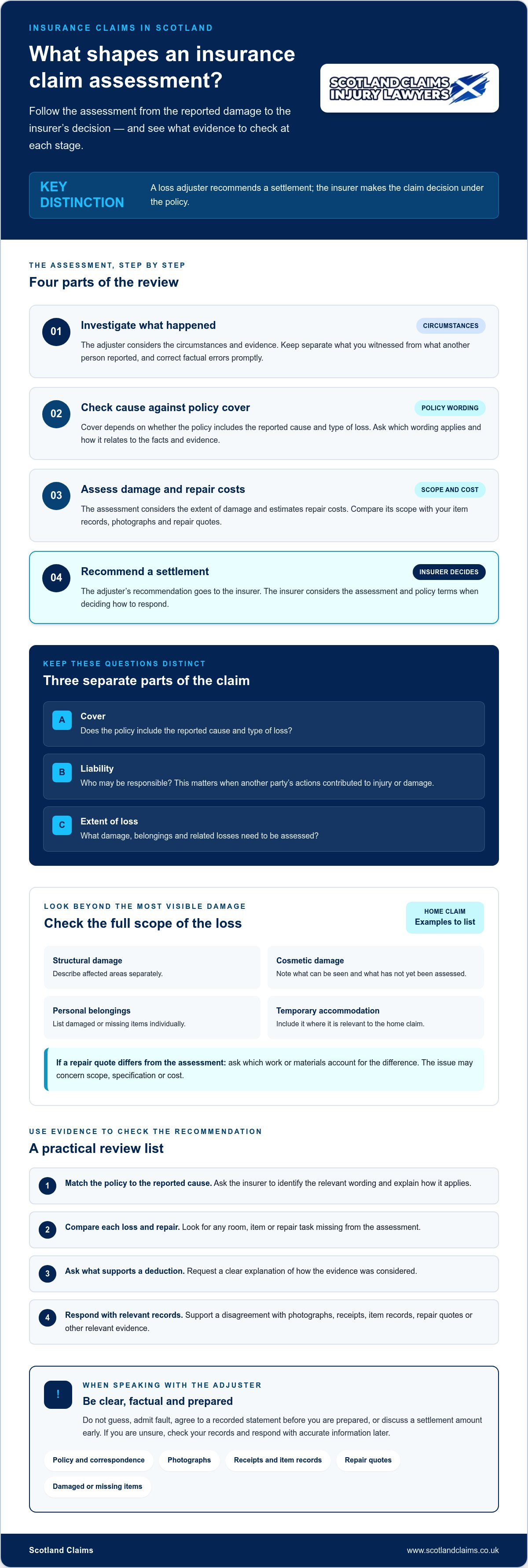
Cover means whether the insurance policy includes the reported cause and type of loss. Liability concerns who may be responsible for an incident, which matters when another party’s actions contributed to injury or damage. When learning how to deal with insurance adjusters in Scotland, keep these questions distinct to make the assessment easier to follow.
An insurer’s loss adjuster checks the policy, investigates the circumstances and considers the evidence before recommending a settlement. Evidence may, for example, establish that an item is damaged, but the policy terms and cause of damage still determine whether it is covered. Ask which wording applies and how it relates to the facts. If responsibility is disputed, set out what happened and refer to relevant records or witness details.
Assessing the Full Extent of Damage
A full assessment considers each relevant loss, not just the most visible damage. For a home claim, the adjuster may examine structural and cosmetic damage, personal belongings and temporary accommodation.
Describe each affected area and item separately. For example, water damage may affect a ceiling, flooring and stored belongings. Listing each item individually helps show the full scope of the claim. The adjuster may also assess whether repair quotes are legitimate and whether material and labour costs match local rates. If a quote differs from the assessment, ask which work or materials account for the difference. This helps clarify whether the disagreement concerns scope, specification or cost.
How the Claims Assessment Works
The loss adjuster investigates damage, assesses whether its cause is covered, estimates repair costs and recommends a settlement to the insurer. The insurer considers the policy terms and assessment when deciding how to respond. The recommendation is not the insurer’s final decision.
Compare the assessment with your policy, photographs, item records and repair quotes. Note any room, item or repair task that appears to be missing. Then ask how the evidence was considered and what supports a deduction. A focused question, such as why a particular repair was excluded, gives the insurer a clear point to address.
Evidence about liability can include records showing what happened, where it happened and what each person did. Separate what you witnessed from what someone else reported. If the assessment overlooks a relevant circumstance, identify the evidence and explain why it matters. To understand how to deal with insurance adjusters in Scotland, focus negotiations on a specific conclusion and support your alternative with relevant records.
A loss assessor can represent a policyholder’s interests during an insurance claim. If your concern involves an injury and disputed responsibility, Scottish injury claim support can help you consider the evidence and the claim.
Challenging a settlement and escalating a complaint
If you disagree with an adjuster’s assessment, ask the insurer to explain its reasoning and identify the evidence it relied on. Compare that explanation with your records and the policy wording. A focused challenge helps identify whether the issue is a factual error, missing evidence or a disagreement about cover. Keep communications in writing where possible, so you can track what you submitted and how the insurer responded.
After an adjuster’s visit, you can request an explanation of settlement deductions and provide further evidence. For example, if an assessment omits a repair item, identify it, attach the relevant quote or photograph, and explain how it relates to the claim. Avoid sending a large bundle without context. A short index linking each document to a disputed point helps the insurer investigate.
Build a clear challenge
Organise your response around the insurer’s stated reasons. Separate questions about cover from disagreements about the extent or cost of damage. For each point, state which decision you’re challenging, explain why and refer to the supporting document. If the insurer says a cause is excluded, ask which policy wording it relies on and explain how the evidence describes what happened.
A loss assessor can present the policyholder’s position and help organise evidence. An assessor may be useful when a claim involves several disputed items or technical repair details. Check that any statements made on your behalf match your records, and keep copies of submissions and replies.
Use the insurer’s complaint process
If the insurer’s response doesn’t resolve the dispute, make a formal complaint through its complaints process. Set out the decision, why you believe it is wrong and the outcome you’re seeking. Include earlier correspondence and new evidence, then ask the insurer to address each point. This creates a clear record if you need to escalate the complaint.
If you believe the insurer has rejected your complaint unfairly, you can ask the Financial Ombudsman Service to review it for free. Explain what happened, why the insurer’s response falls short and which documents support your account. The Ombudsman reviews the complaint, not simply the adjuster’s conduct, so explain how the insurer’s decision affected the claim.
When a complaint concerns the adjuster
A complaint to the Chartered Institute of Loss Adjusters (CILA) must concern a CILA member. CILA can investigate member conduct, but it cannot determine the claim outcome or exercise authority over companies. Keep the distinction clear: raise a dispute about cover or settlement with the insurer, and address alleged member conduct through CILA’s complaints route. Give dates, correspondence and specific examples to explain your concern.
Reviewing insurance settlement offers
Assess the offer against your loss, the evidence and the policy, not just its headline figure. If an adjuster asks you to sign a settlement or release, request a copy and time to understand its terms before deciding.
Evaluating a Settlement Offer
A settlement offer is the insurer’s proposed payment for the losses it accepts under the claim. Review each part, because the headline amount may not show which repairs, items or other losses are included.
Compare the offer with the adjuster’s assessment, repair quotes and your records. Check which work is covered, which items are excluded and how each deduction is explained. That difference calls for a clear comparison of the work and costs assessed.
Look for gaps, not just a higher total. Does the offer include every damaged area? Does it account for the repair method described in the quote? Ask the insurer to explain any differences between its estimate and your evidence. A written breakdown helps you identify the disputed item and respond with relevant supporting information.
Keep your interests in view. An adjuster’s estimate is a recommendation, not the settlement itself, and the insurer makes the decision. If specialist knowledge is needed to assess repair details or the scope of loss, involve a suitable assessor. Ask them to connect each concern to the policy, evidence or repair requirement rather than making a general objection.
Signing a Settlement or Release
A settlement or release sets out terms for resolving a claim and may affect what you can pursue afterwards. Read the whole document before signing, as its wording may define which losses or parts of the claim are settled.
Ask for the document in writing and clarify any phrase you don’t understand. Check whether it covers only the damage already assessed or also other losses connected with the incident. If the wording seems broader than the offer discussed, ask the insurer to explain the difference before you agree.
Don’t let a request to sign replace a proper review. Compare the document with the offer, the assessment and the claim details. If you dispute an amount or the scope of the release, explain the specific issue in writing and request a revised document or response. Keep the signed version and related correspondence with your claim records.
Commercial claims may involve different policy terms and business losses, so assess an offer against the relevant cover and supporting records. For any claim, decide only after you understand what the settlement includes, what it excludes and how signing affects the claim.
How should I prepare for an insurance adjuster’s visit in Scotland?
Prepare a clear record before the adjuster arrives. Gather your insurance policy, proof of ownership and correspondence with the insurer so you can answer questions using documents rather than memory.
Photograph or video-record damage before repairs begin. Take wide views of each affected room, then close-ups of specific damage, such as a water mark on a ceiling or a cracked window frame. Keep the original files and note which room or item each image shows. If urgent work is needed to protect the property, record its condition first where practical and keep records of the work.
For lost or destroyed belongings, make an inventory with a description, purchase date, original price and estimated replacement cost. For example, list a damaged chair separately from a damaged table rather than grouping them as “furniture”. Add receipts or other proof of ownership where available. This gives the adjuster item-by-item information to consider alongside damage photographs.
Keep repair quotes and relevant receipts together in one folder. Label each document with the room, item or repair it concerns. If a quote covers several jobs, mark the line relating to the claimed damage. The adjuster assesses whether quotes are legitimate and whether material and labour costs match local rates, so itemised information helps show what each figure covers.
Before the visit, note the sequence of events and any details you need to explain. Keep observations separate from assumptions. For example, describe when you first noticed a leak, but don’t guess its cause if you don’t know. If you need to confirm a date from correspondence or a receipt, say so and follow up with the record. Clear answers help the adjuster connect your account to the evidence.
During the inspection, show every affected area, including less visible damage. A home assessment may cover structural and cosmetic damage, belongings and temporary accommodation. Don’t focus only on the room where the problem first appeared. If damage extends elsewhere, explain how you noticed it and point to the relevant photographs or inventory entry.
Keep a copy of everything you provide and note any follow-up questions. Respond promptly with the requested evidence, such as a receipt or repair quote, and identify what it supports. Clear organisation can help the claims process move forward, although the adjuster’s availability may affect when the assessment takes place.
Scotland Claims Injury Lawyers: Road Traffic Accident Claims
Scotland Claims Injury Lawyers can help if an insurance adjuster is handling an injury claim after a road traffic accident in Scotland. The firm also handles slip or trip claims and work injury claims, giving you support focused on personal injury compensation rather than property damage disputes.
If you’re challenging how an insurer assesses your injury claim, specialist legal support can help you understand the evidence and pursue the claim. Scotland Claims Injury Lawyers works on a no-win-no-fee basis and promises 100% compensation: it recovers its fees from the at-fault party and passes the entire settlement to you.
Contact Scotland Claims Injury Lawyers to discuss your injury claim or visit www.scotlandclaims.co.uk.
Choose your next step with confidence
Knowing how to deal with insurance adjusters in Scotland can help you approach your next decision with a clear purpose. Identify what needs resolving: a disputed assessment, an unanswered question or an injury claim that needs separate attention. Keep your next communication focused on that issue. A precise request makes it easier to understand the insurer’s position and consider your next step.
If an adjuster’s decision relates to an injury after a road traffic accident, slip or trip, or workplace incident, Scotland Claims Injury Lawyers handles these personal injury claims. Bring the relevant correspondence and explain which part of the claim concerns you. Specialist support can help you understand your options and decide how to proceed while keeping your priorities in view.
Take the next step when you’re ready. A clear discussion of your circumstances can help you move forward with greater confidence.
Your claim deserves careful consideration. Start with the issue that matters most to you.
Frequently Asked Questions
What happens after the insurer is notified of the loss?
The insurer records the claim, gathers initial details and decides what assessment is needed. It may appoint a loss adjuster to investigate the cause, inspect damage and recommend a settlement. Keep your claim reference and note the date and method of each contact. For example, if you report a damaged ceiling, retain photographs and messages about the leak so later questions can be matched to the original report.
What does an insurance adjuster do in Scotland?
An insurer’s loss adjuster investigates the reported loss and provides an evidence-based assessment for the insurer. They may inspect damage, review repair quotes and consider whether the cause falls within the policy. Their role differs from a loss assessor, who is appointed by the policyholder to represent their interests. If an adjuster gives a verbal explanation, ask for the key reasoning in writing to keep a clear record.
What evidence should I provide to an insurance loss adjuster?
Provide evidence that explains what happened, what was damaged and what the claimed work involves. Useful records can include dated photographs, receipts, proof of ownership, repair estimates and relevant correspondence. For a damaged appliance, for example, show its condition and provide a purchase record or model details if available. Label files clearly and explain which part of the claim each document supports, so the adjuster can assess them efficiently.
What should I do if I disagree with an insurance adjuster’s valuation or report?
Identify the specific item or conclusion you dispute, then explain why the report doesn’t match your evidence. If a repair estimate excludes replacing damaged flooring, point to the relevant photographs and quote, and ask the insurer to explain its assessment. Keep your response factual and retain a copy. You can also provide further evidence or involve a loss assessor to present your position on your behalf.
How do I complain about an insurer or loss adjuster in Scotland?
For a dispute about the claim decision, use the insurer’s formal complaints process and state the outcome you want. If you believe the insurer has rejected your complaint unfairly, you can ask the Financial Ombudsman Service to review it for free. A complaint to CILA must concern one of its members. CILA can investigate member conduct but cannot decide the claim outcome or exercise authority over companies.
Can an insurer reject a claim for non-disclosure or breach of policy conditions in Scotland?
An insurer may refuse a claim if it concludes the loss falls outside the policy cover. For example, a home claim may be refused where the cause is excluded, such as wear and tear or lack of maintenance. If the insurer relies on non-disclosure or an unmet condition, ask it to identify the relevant policy wording and explain how it applies to your circumstances. Keep the explanation and supporting records together.