Role of evidence in injury claims in Scotland 2026

Many people assume compensation arrives automatically after an injury, but this misconception overlooks a crucial reality: securing fair settlement depends entirely on the strength of your evidence. In Scotland, personal injury claims in 2026 require meticulous documentation, expert testimony when appropriate, and adherence to strict legal protocols. This article explores how evidence shapes claim outcomes, the types you need, and practical steps to gather proof effectively. You will gain clarity on legal expectations, expert witness requirements, and how robust evidence improves your chances of maximum compensation.
Table of Contents
Key takeaways
The foundation: understanding evidence in injury claims
Evidence forms the backbone of every personal injury claim in Scotland. Without it, even legitimate injuries struggle to secure compensation. The legal framework governing claims begins with the Pre-Action Protocol, which applies to cases valued at £25,000 or less. This protocol mandates that evidence must be gathered early and verified by solicitors before formal proceedings begin.
Solicitors play an indispensable role in this process. They ensure documentation meets court standards, verify witness accounts, and present evidence strategically during negotiations or litigation. Their expertise transforms raw information into compelling legal arguments that support your right to compensation.
Common evidence types include:
- Medical reports detailing injuries and treatment
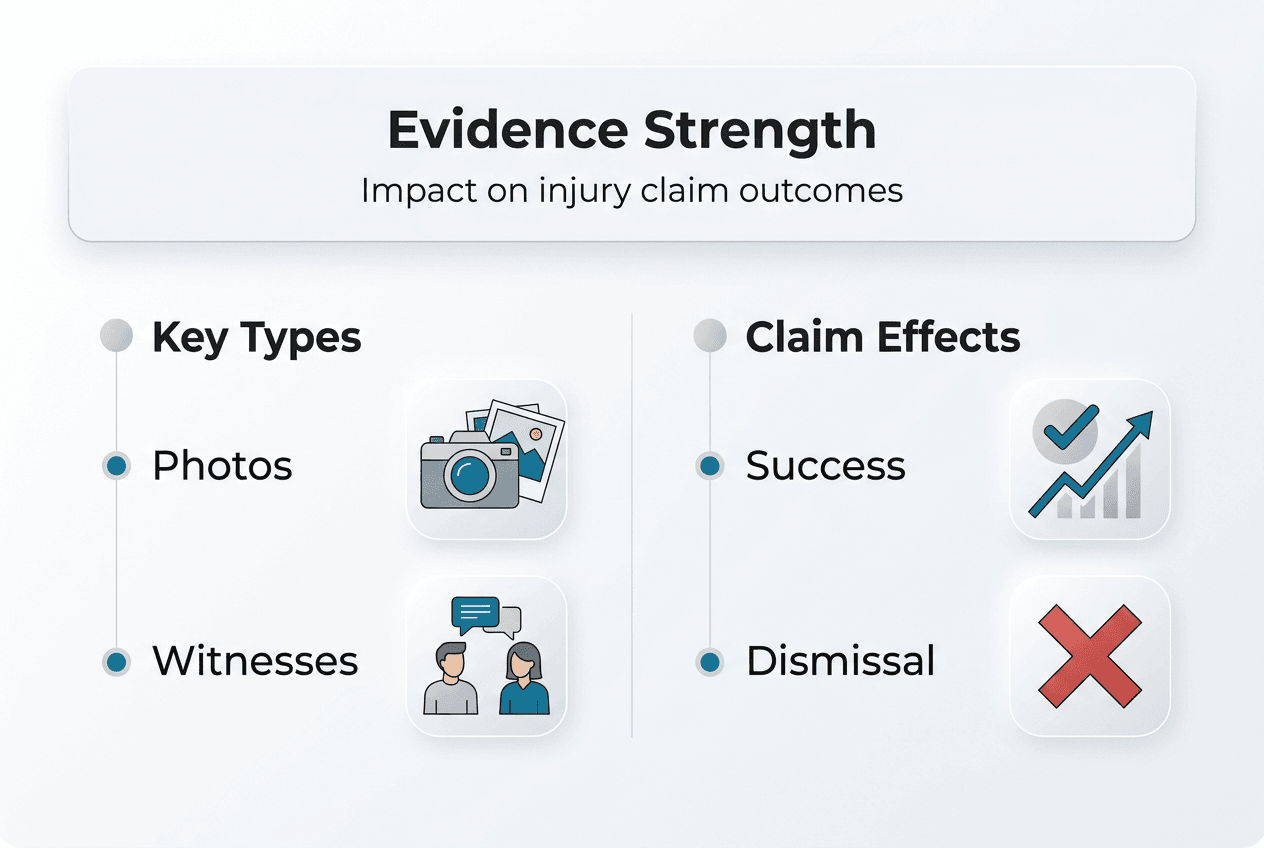
- Witness statements from people who saw the accident
- Photographs of accident scenes and injuries
- Accident records from employers or local authorities
- Financial documents showing lost earnings and expenses
Acting quickly preserves crucial evidence before it disappears. Skid marks fade, witnesses forget details, and CCTV footage gets deleted. Following a step-by-step injury claim guide ensures you capture everything needed whilst memories remain fresh. Delaying this process weakens your position significantly.
Without proper evidence, claims face early dismissal or settlements far below fair value. Insurers scrutinise every detail, looking for gaps they can exploit. A comprehensive injury claim documents list helps you organise proof systematically, leaving no room for doubt about your entitlement.
Pro Tip: Photograph injuries immediately after the accident and again during recovery to create a visual timeline that demonstrates progression and severity.
The importance of acting quickly after an accident cannot be overstated. Courts expect claimants to demonstrate diligence in preserving evidence. Failing this duty can result in reduced compensation or outright rejection, regardless of injury severity.
Navigating expert and specialised evidence in complex cases
Expert evidence becomes essential when claims involve technical or medical complexities beyond common knowledge. Medical professionals provide reports on injury causation, prognosis, and treatment needs. Engineers analyse accident mechanics, particularly in workplace or road traffic cases. However, Scottish courts apply strict standards to ensure expert testimony remains necessary, impartial, and proportionate.

The landmark case Carol Grant and others against Lothian Buses Limited established that courts only admit expert evidence if it genuinely clarifies complex facts. Judges reject unnecessary experts in straightforward cases, preventing parties from inflating costs or introducing bias.
Expert evidence proves particularly valuable in low-velocity impact scenarios. These cases often involve significant injuries despite minimal vehicle damage, creating scepticism among insurers. In Fraser v Munro, expert evidence validated injury claims despite negligible damage, demonstrating how specialist testimony counters assumptions that minor impacts cannot cause harm.
Key considerations for expert evidence include:
- Selecting experts with recognised qualifications and relevant experience
- Ensuring complete independence from parties involved
- Limiting scope to areas genuinely requiring specialist knowledge
- Providing clear, accessible explanations of technical findings
Courts scrutinise expert witnesses rigorously to prevent partisan testimony masquerading as objective analysis. The expert’s duty lies with the court, not the party instructing them. This impartiality requirement ensures fairness and credibility throughout proceedings.
Steps for securing expert evidence:
- Identify specific technical or medical questions requiring specialist input
- Instruct appropriately qualified experts through your solicitor
- Provide comprehensive background information and documentation
- Review draft reports for accuracy and clarity
- Prepare for potential cross-examination if the case proceeds to court
“Expert evidence must assist the court in understanding matters outside ordinary knowledge, remaining proportionate to the issues at stake and free from bias.”
Experts’ impartiality and proportionate involvement enhance claim credibility significantly. When properly deployed, specialist testimony transforms complex facts into persuasive arguments that support fair compensation. Understanding when to claim injury compensation with expert backing ensures you neither undervalue nor overcomplicate your case.
How evidence strength shapes litigation trends and claim success
The introduction of Qualified One-Way Costs Shifting (QOCS) in Scotland fundamentally changed personal injury litigation dynamics. This reform protects claimants from paying defendants’ costs if they lose, removing a significant financial barrier to pursuing legitimate claims. However, it also increased case volumes, making evidence quality more critical than ever in distinguishing genuine claims from weak ones.
Personal injury litigation rose sharply after QOCS implementation, with cases increasing from an average of 9,055 pre-QOCS to 9,700 annually between 2022 and 2025. Projections suggest 11,575 cases in 2025/26, representing a 28% increase over historical averages. This surge highlights how evidence determines both court access and ultimate outcomes.
Robust evidence helps separate meritorious claims from baseless ones. Insurers and defendants face mounting caseloads, making them scrutinise documentation more carefully. Strong proof accelerates settlements by removing doubt about liability and injury severity. Weak evidence, conversely, invites prolonged disputes and reduced offers.
| Period |
Average Annual Cases |
Percentage Change |
| Pre-QOCS |
9,055 |
Baseline |
| 2022-2025 |
9,700 |
+7% |
| 2025/26 (Projected) |
11,575 |
+28% |
This data demonstrates how procedural reforms interact with evidence standards to shape litigation patterns. QOCS removed cost barriers, but success still depends on substantiating your claim thoroughly.
Factors that strengthen evidence impact:
- Contemporaneous documentation created immediately after incidents
- Multiple independent witness corroborations
- Objective medical assessments from approved professionals
- Detailed photographic and video records
- Comprehensive financial documentation of losses
Pro Tip: Maintain a claim diary recording symptoms, treatment, and daily impact from the accident date onwards to create compelling evidence of ongoing harm.
Strong evidence supports compensation awards by removing ambiguity about causation and damages. It also discourages fraudulent claims, as fabricated injuries cannot withstand rigorous documentation requirements. Understanding your personal injury rights includes recognising how evidence quality directly affects settlement amounts and litigation success rates.
Practical steps for securing and using evidence effectively
Gathering evidence requires systematic action from the moment an accident occurs. Delayed or incomplete documentation undermines even the strongest cases. Following proven methods ensures you capture everything needed to support your claim comprehensively.
Steps for immediate evidence collection:
- Photograph the accident scene from multiple angles before anything changes
- Record contact details for all witnesses present
- Note environmental conditions like lighting, weather, and visibility
- Report the incident to relevant authorities or employers immediately
- Seek medical attention and ensure injuries are documented thoroughly
Secure medical examinations from professionals approved by your solicitor. Independent assessments carry more weight than reports from treating doctors alone, as they specifically address legal questions about causation and prognosis. These examinations provide objective evidence that insurers find harder to dispute.
Keep copies of all correspondence and official records related to your claim. This includes:
- Accident report forms
- Medical appointment letters and discharge summaries
- Wage slips and employment contracts showing lost earnings
- Receipts for treatment costs and travel expenses
- Insurance correspondence and claim reference numbers
Working with solicitors experienced in Scottish injury claims ensures evidence is robust and properly presented. They verify documentation meets legal standards, identify gaps early, and organise material strategically to maximise impact during negotiations.
Common pitfalls to avoid:
- Relying solely on memory rather than contemporaneous notes
- Delaying medical assessment until symptoms worsen
- Failing to preserve physical evidence like damaged clothing
- Accepting initial settlement offers without proper valuation
- Posting about accidents on social media before claims resolve
Pro Tip: Create a dedicated folder (physical or digital) for all claim-related documents immediately after your accident to prevent loss and ensure easy access when needed.
Understanding what happens after making a claim helps you anticipate evidence requirements at each stage. From initial notification through settlement or trial, documentation standards remain consistently high. Preparing thoroughly from the outset prevents scrambling for proof later when memories fade and records become harder to obtain.
Maintaining a detailed injury claim documents list throughout your claim ensures nothing gets overlooked. The importance of acting quickly extends beyond preserving physical evidence to creating comprehensive records that withstand scrutiny months or years later during settlement negotiations or court proceedings.
How Scotland Claims can support your injury claim
Navigating evidence requirements alone can feel overwhelming, especially whilst recovering from injury. Scotland Claims connects you with specialist solicitors who understand Scottish personal injury law comprehensively. They work on a no win no fee basis, meaning you pay nothing upfront and retain 100% of your compensation if successful.
Our expert solicitors assist in gathering and presenting robust evidence tailored to your specific injury type. Whether you suffered a back injury from a workplace accident or a knee injury in a road traffic collision, we ensure documentation meets the exacting standards courts and insurers demand. This specialist support maximises your compensation chances by eliminating gaps that could undermine your claim.
Access tailored guidance throughout the claims process, from initial evidence collection through final settlement. Our solicitors handle complex legal procedures whilst you focus on recovery, confident that experienced professionals are building the strongest possible case on your behalf.
Frequently asked questions
What is the role of evidence in injury claims?
Evidence proves your injury occurred, establishes who was responsible, and demonstrates the impact on your life. Without strong documentation, insurers can dispute liability or minimise compensation regardless of actual harm suffered. Courts require objective proof rather than relying on claimant testimony alone. Understanding how to claim injury compensation includes recognising that evidence quality directly determines claim success.
How soon should I gather evidence after an accident in Scotland?
Begin collecting evidence immediately, ideally within hours of the incident. Physical evidence deteriorates rapidly, witnesses become harder to locate, and memories fade quickly. The Pre-Action Protocol expects prompt action, and delays can suggest negligence on your part. Acting quickly after an accident preserves crucial proof and demonstrates diligence that courts value when assessing claims.
When is expert evidence necessary in a personal injury claim?
Expert evidence becomes essential when claims involve technical or medical complexities beyond ordinary knowledge. Low-velocity impact cases, complex workplace accidents, and disputed causation typically require specialist testimony. However, courts only admit experts when necessary, impartial, and proportionate to avoid unnecessary costs. Simple cases with clear liability rarely need expert input.
Can weak evidence harm my injury claim?
Absolutely. Weak or incomplete evidence often results in claim rejection or settlements significantly below fair value. Insurers exploit documentation gaps to dispute liability or minimise injury severity. Strong, well-organised proof removes ambiguity and forces insurers to make reasonable offers. The difference between comprehensive and inadequate evidence can mean thousands of pounds in compensation.
Recommended